
Precise diagnostics for the right therapy
An accurate diagnosis is the foundation of every successful treatment. We use state-of-the-art imaging and targeted diagnostic procedures to precisely classify your symptoms.
Symptoms
Spinal conditions cause the following key symptoms.
Local Pain
These occur very frequently in the lower back and rarely in the neck. Basically, these complaints are harmless and usually caused by wear and tear of the intervertebral disc and small facet joints. If the pain cannot be controlled by painkillers (anti-inflammatory drugs) or lasts longer than 2 weeks, a family doctor or specialist should be consulted.
Extremity Pain
These are either muscular due to local pain or due to nerve entrapment in the spinal canal. Again, if the pain cannot be controlled by painkillers or lasts longer than 2 weeks, a doctor should be consulted.
Neurological Symptoms
These are caused by compression of the nerve root or spinal cord in the spinal canal. Numbness or tingling are annoying but relatively harmless compared to loss of muscle function (e.g., lifting the foot). In case of loss of muscle function, or of bladder or bowel control, a doctor must be consulted immediately.
Symptom Types
The type of symptoms determines the further diagnostic steps and the urgency of treatment. An accurate description of the symptoms is therefore of the utmost importance for a correct diagnosis.
Injections
Diagnostic anesthesia of the nerves and/or facet joints under fluoroscopic guidance allows the pain to be precisely localized, the type of pain to be determined, and thus its cause to be identified.
This interventional pain diagnostics indicates the therapeutic direction and the individual treatment form is determined by the specialist in accordance with imaging procedures (X-ray, CT or MRI).
The needle for injecting local anesthesia is placed precisely into the facet joint space under fluoroscopic control. If subsequent pain relief occurs during the anesthetic's duration of action, the origin of the pain is proven.
In this positive case, cortisone can be therapeutically injected using the same technique.
Using a catheter introduced into the spinal canal with the tip at the disc herniation and nerve, a local anesthetic and cortisone are applied for pain relief.
This examination can be performed on both the cervical and lumbar spine.
With this examination as well, if pain relief occurs, the origin of the pain is proven.
The cortisone may then lead to lasting symptom relief (in 30% of cases).
X-Ray Diagnostics
The type and duration of symptoms determine the further course of action. The clinical examination findings are also central.
The modern radiological diagnostic measures available today, together with the clinical findings, allow a diagnosis to be made in most cases.
Recommended Procedure
- Consultation with a family doctor or directly with a specialist if symptoms persist for longer than 1-2 weeks
- Standard X-ray examination
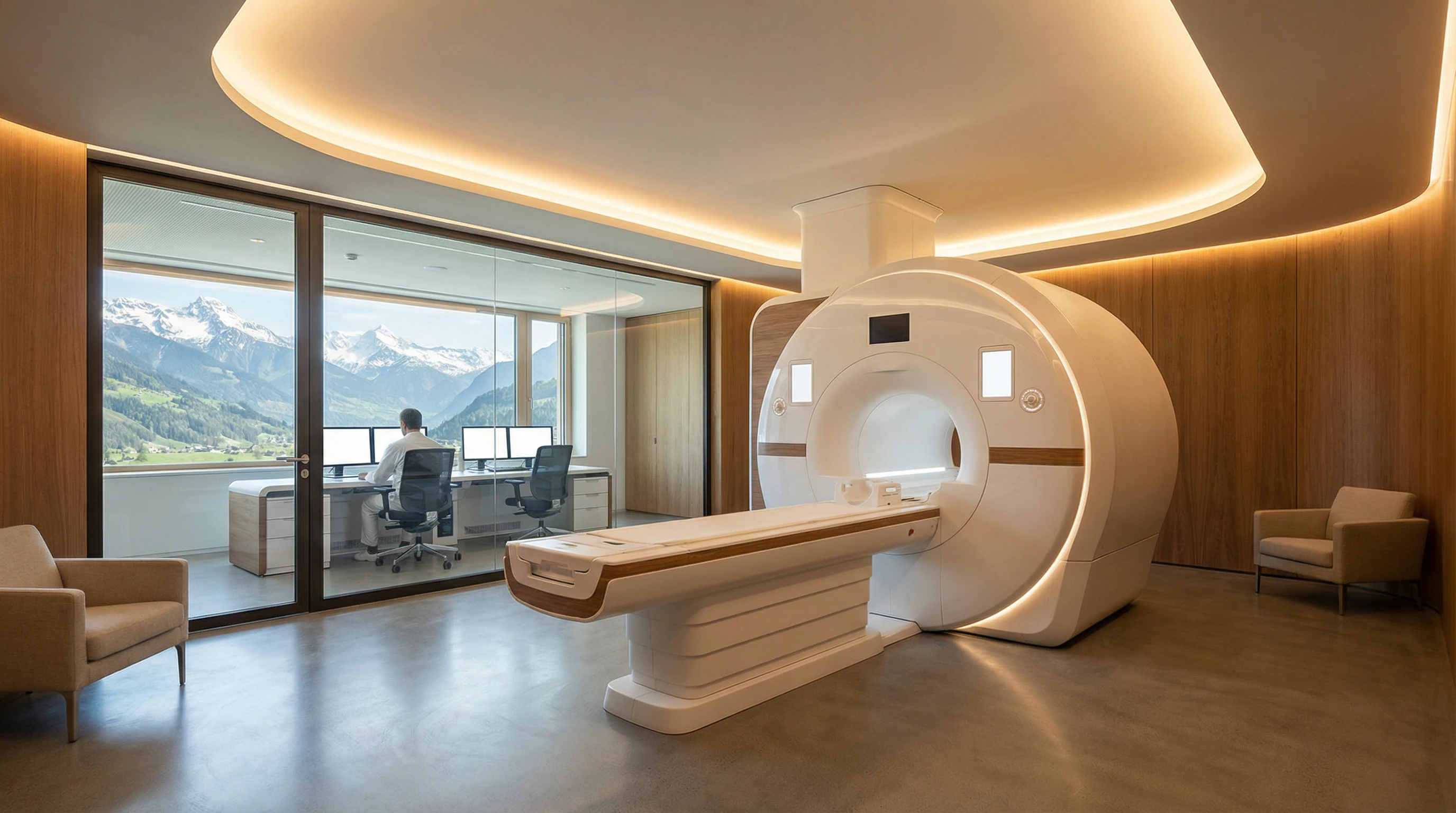
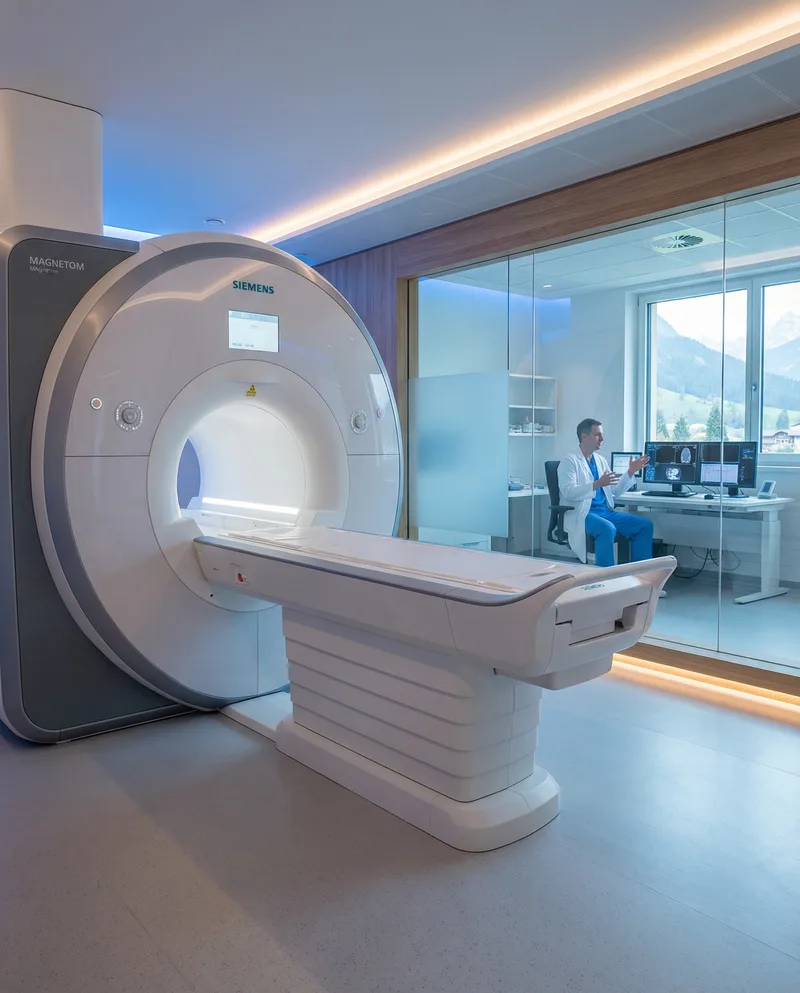
- For severe symptoms or pain lasting more than 6 weeks without improvement, an MRI examination is ordered
- Other special examinations may then be ordered by the specialist
Patient help topics
After diagnostics, patients usually have the same follow-up questions: what do these symptoms mean, when is it urgent, and when is surgery actually worth discussing?
Medically reviewed by Dr. med. Christian R. Etter
Orthopaedic Surgery FMH, specialized in spine surgery
Last medical review: April 2026
View curriculum vitaeGet Your Second Opinion Now!
Usually covered by your Swiss health insurance.
With the Covid pandemic, online competence has increased significantly, even among older people. The home office trend has also shown what is possible online. Telemedicine has made significant progress in the wake of this development, and especially for a quick answer to the question of whether an operation is sensible or not, the personal meeting in the "digital space" is a valuable addition.
How it works
Fill out the questionnaire and upload your documents.
The spinal surgery specialist has access to the documents immediately after receipt in an EU-compliant, data-secure cloud, enabling an extraordinarily fast preparation of the second opinion. Based on the documents, the expert first assesses the urgency. In any case, you will receive the second opinion within 5 working days, with express option in 2 days. In complex case situations, the opinion of an international expert is additionally obtained.
Within 5 working days you will receive the second opinion via email. For ordered emergency express second opinions, you will receive it within 2 working days. At the same time, you will receive a summarizing voice memo with deeper explanations. Together with the second opinion, you will receive an appointment for a 15-minute follow-up discussion via Zoom, Skype or FaceTime. This way, any uncertainties can be clarified.