
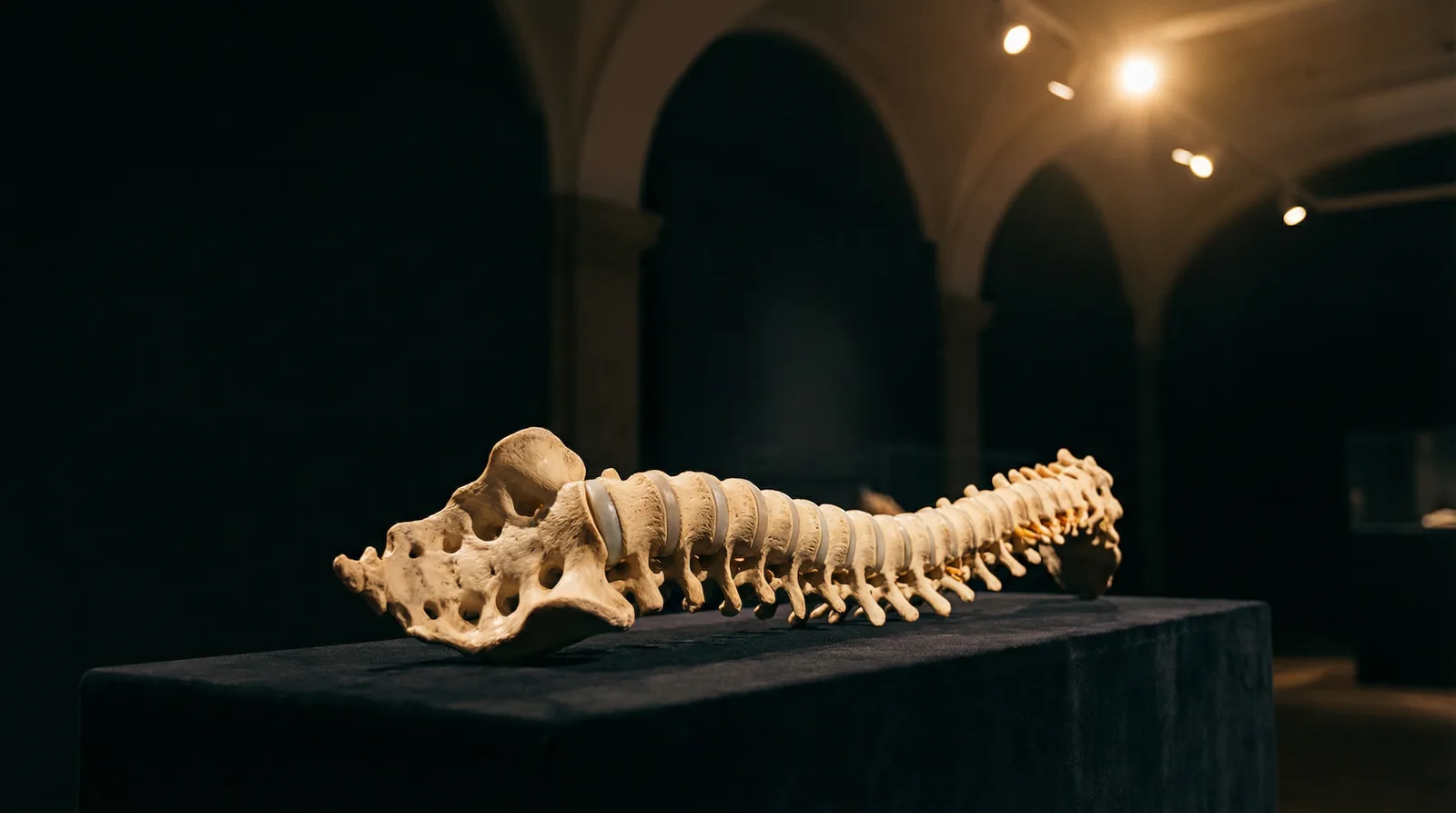
Common spinal conditions
Many back problems develop from wear-related changes that begin years earlier. Understanding the diagnosis helps patients interpret symptoms, reduce unnecessary fear, and choose the next step at the right time.
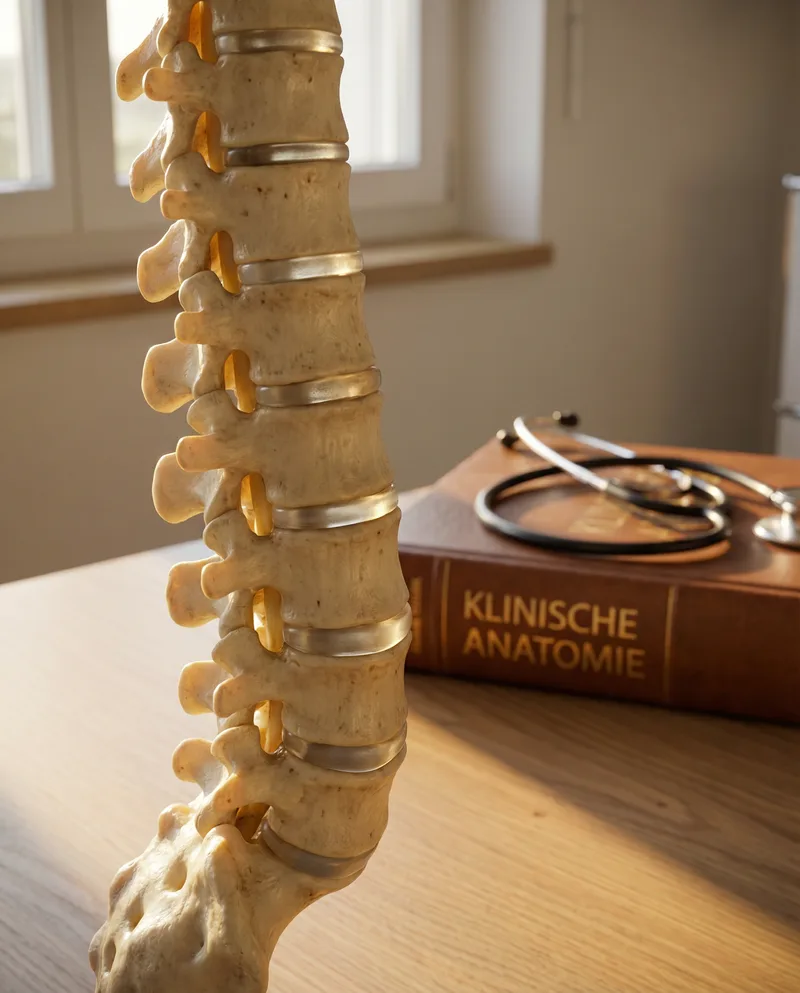
Understanding spinal conditions
A solid understanding of your condition is the first step toward meaningful treatment. Below you will find a deliberately compact overview of common spinal conditions, their typical causes, warning signs, and treatment options.
The intervertebral disc functions as a shock absorber. High loads lead to tears in the outer disc mantle. Along these tears, core material can protrude outward and press on the nerve in the spinal canal. This then leads to pain in the extremities (arm for cervical disc herniation, leg for lumbar disc herniation). Additionally, neurological symptoms such as tingling, sensory disturbances, or loss of motor control can occur.
Disc herniations occur most often in the lumbar spine and less often in the cervical spine. At the beginning, lower back or neck pain may dominate; when protruding disc material irritates or compresses a nerve, pain typically radiates in a band-like pattern into the leg or arm.
The next step depends mainly on pain intensity and nerve function. Clear loss of strength, loss of control of a muscle group, or pain that cannot be controlled should be assessed promptly with appropriate imaging. Without these warning signs, treatment often starts conservatively with medication, physiotherapy, and follow-up.
A consequence of years of aging and therefore typically occurring from age 60 onwards. Narrowing of the spinal canal and thus of the spinal cord and nerves. Through the process of self-stabilization of the spine, ligaments and bony structures become significantly thickened, thereby narrowing the nerve canals. The wear of the intervertebral disc with height reduction also supports this process. The decisive symptoms are pain in the extremities with feelings of weakness, limited walking distance, and possibly neurological symptoms. Significantly more common in the lumbar spine than in the cervical spine.
In spinal stenosis, the vertebral arches, ligaments, and small facet joints around the nerve canal thicken over many years. This gradually reduces the space available for the spinal cord and nerves. A seemingly small event, such as an awkward movement or lifting an object, can then trigger or intensify symptoms.
For orientation, it is important to distinguish isolated back pain from symptoms suggesting functional nerve compression: load-dependent leg or arm pain, weakness, numbness, or a clearly shortened walking distance.
The degeneration process or wear and tear of the spine is fundamentally a natural process. The cause begins with the shrinkage process of the intervertebral disc. The height reduction of the disc in front, caused by drying out, then leads to overloading of the small vertebral joints in the back. This fundamentally leads to stiffening with reduced function. Symptoms are pain directly at the spine, most commonly in the lower back or less frequently in the neck.
As in other joints, arthrosis can also develop in the small facet joints of the spine. When the disc loses water and height, the load distribution in the motion segment changes; the posterior facet joints are stressed more heavily and may become a pain source themselves.
Most degenerative complaints are first treated without surgery: back-friendly behavior, targeted physiotherapy, pain medication during acute phases, and, where appropriate, image-guided injections. Surgical questions become relevant only when persistent pain, instability, or nerve compression remains despite reasonable conservative treatment.
Curvature (scoliosis) and vertebral slippage (degenerative spondylolisthesis) are relatively common causes of lower back pain. Due to the misalignment, nerves become pinched, which can then lead to leg pain and symptoms of spinal stenosis.
A curvature of the lumbar spine can progress with age and load discs and facet joints unevenly. This can accelerate wear and reduce the mechanical balance of the spine.
In vertebral slippage, one vertebra shifts forward, usually on the basis of degenerative disc changes. Initially this often causes lower back pain; in more advanced stages, the nerve canals can narrow and trigger pain, numbness, or weakness in one or both legs.
These fractures occur most frequently in the thoracic and upper lumbar spine, usually after minor trauma or spontaneously. They usually cause immediate back pain. Through a very small operation involving puncture of the vertebral body and filling it with bone cement, rapid pain relief is achieved.
Osteoporotic vertebral fractures are not always recognized as fractures at first because they can occur after a minor load or even spontaneously. Early diagnosis matters so that pain, increasing deformity, and loss of physical capacity do not become chronic.
If the fracture is fresh and painful, selected cases may benefit from minimally invasive stabilization with bone cement to support the vertebral body and improve load bearing. The osteoporosis itself should also be assessed and treated to reduce the risk of further fractures.
Common patient questions
These topics are most useful when you want more than a diagnosis label and need practical orientation about symptoms, urgency and possible next steps.
Medically reviewed by Dr. med. Christian R. Etter
Orthopaedic Surgery FMH, specialized in spine surgery
Last medical review: April 2026
View curriculum vitaeGet Your Second Opinion Now!
Usually covered by your Swiss health insurance.
With the Covid pandemic, online competence has increased significantly, even among older people. The home office trend has also shown what is possible online. Telemedicine has made significant progress in the wake of this development, and especially for a quick answer to the question of whether an operation is sensible or not, the personal meeting in the "digital space" is a valuable addition.
How it works
Fill out the questionnaire and upload your documents.
The spinal surgery specialist has access to the documents immediately after receipt in an EU-compliant, data-secure cloud, enabling an extraordinarily fast preparation of the second opinion. Based on the documents, the expert first assesses the urgency. In any case, you will receive the second opinion within 5 working days, with express option in 2 days. In complex case situations, the opinion of an international expert is additionally obtained.
Within 5 working days you will receive the second opinion via email. For ordered emergency express second opinions, you will receive it within 2 working days. At the same time, you will receive a summarizing voice memo with deeper explanations. Together with the second opinion, you will receive an appointment for a 15-minute follow-up discussion via Zoom, Skype or FaceTime. This way, any uncertainties can be clarified.