

Most back pain is distressing but not dangerous. It becomes more concerning when red flags appear or when back pain is part of a larger neurological or systemic problem.
Assessing Your Symptoms
What is often not immediately alarming
- Pain after physical strain without neurological loss.
- Temporary stiffness without red flags.
- Symptoms that slowly improve with time and movement.
What should be taken seriously
- Fever, infection signs, weight loss, or a history of cancer.
- Night pain or pain that wakes you from sleep.
- New weakness, increasing neurological symptoms, or marked numbness.
- New bladder or bowel problems or numbness in the saddle area.
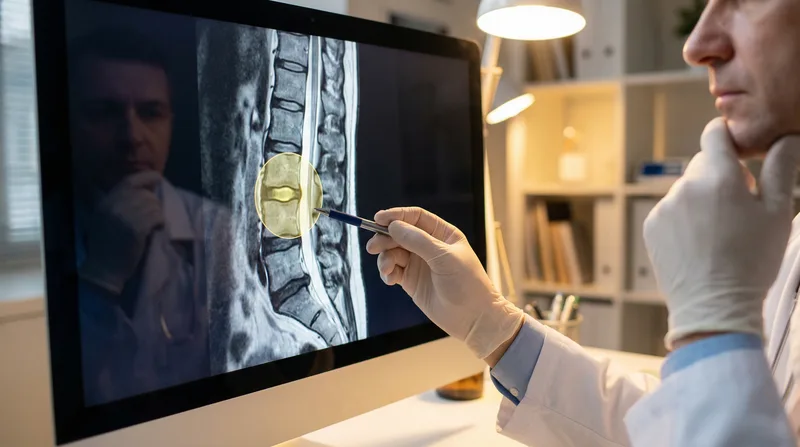
Red flags do not automatically mean catastrophe
But they do mean the pain should not be handled like an ordinary back-pain episode. At that point, a targeted medical assessment is important to rule out serious causes or a neurological emergency.
Three situations where you should not just wait
Neurological deterioration
New weakness, numbness, or gait change needs prompt assessment.
Bladder, bowel, saddle symptoms
These can point to a serious nerve compression problem and need urgent review.
General illness signs
Fever, night sweats, weight loss, or recent infection change the meaning of back pain significantly.
Frequently Asked Questions
No. Pain intensity alone does not automatically mean a dangerous cause. What matters is the presence of red flags and the wider clinical context.
Fever, signs of infection, weight loss, a history of cancer, night pain, new bladder or bowel problems, saddle numbness, and rapidly increasing weakness all deserve attention.
If there is weakness, bladder or bowel dysfunction, numbness around the saddle area, or severe back pain together with signs of systemic illness, urgent assessment is needed.
Further Information
The following sources serve as reliable external references. Final academic citations will be added before publication.
Medically reviewed by Dr. med. Christian R. Etter
Orthopaedic Surgery FMH, specialized in spine surgery
Last medical review: April 2026
View curriculum vitaeGet Your Second Opinion Now!
Usually covered by your Swiss health insurance.
With the Covid pandemic, online competence has increased significantly, even among older people. The home office trend has also shown what is possible online. Telemedicine has made significant progress in the wake of this development, and especially for a quick answer to the question of whether an operation is sensible or not, the personal meeting in the "digital space" is a valuable addition.
How it works
Fill out the questionnaire and upload your documents.
The spinal surgery specialist has access to the documents immediately after receipt in an EU-compliant, data-secure cloud, enabling an extraordinarily fast preparation of the second opinion. Based on the documents, the expert first assesses the urgency. In any case, you will receive the second opinion within 5 working days, with express option in 2 days. In complex case situations, the opinion of an international expert is additionally obtained.
Within 5 working days you will receive the second opinion via email. For ordered emergency express second opinions, you will receive it within 2 working days. At the same time, you will receive a summarizing voice memo with deeper explanations. Together with the second opinion, you will receive an appointment for a 15-minute follow-up discussion via Zoom, Skype or FaceTime. This way, any uncertainties can be clarified.