
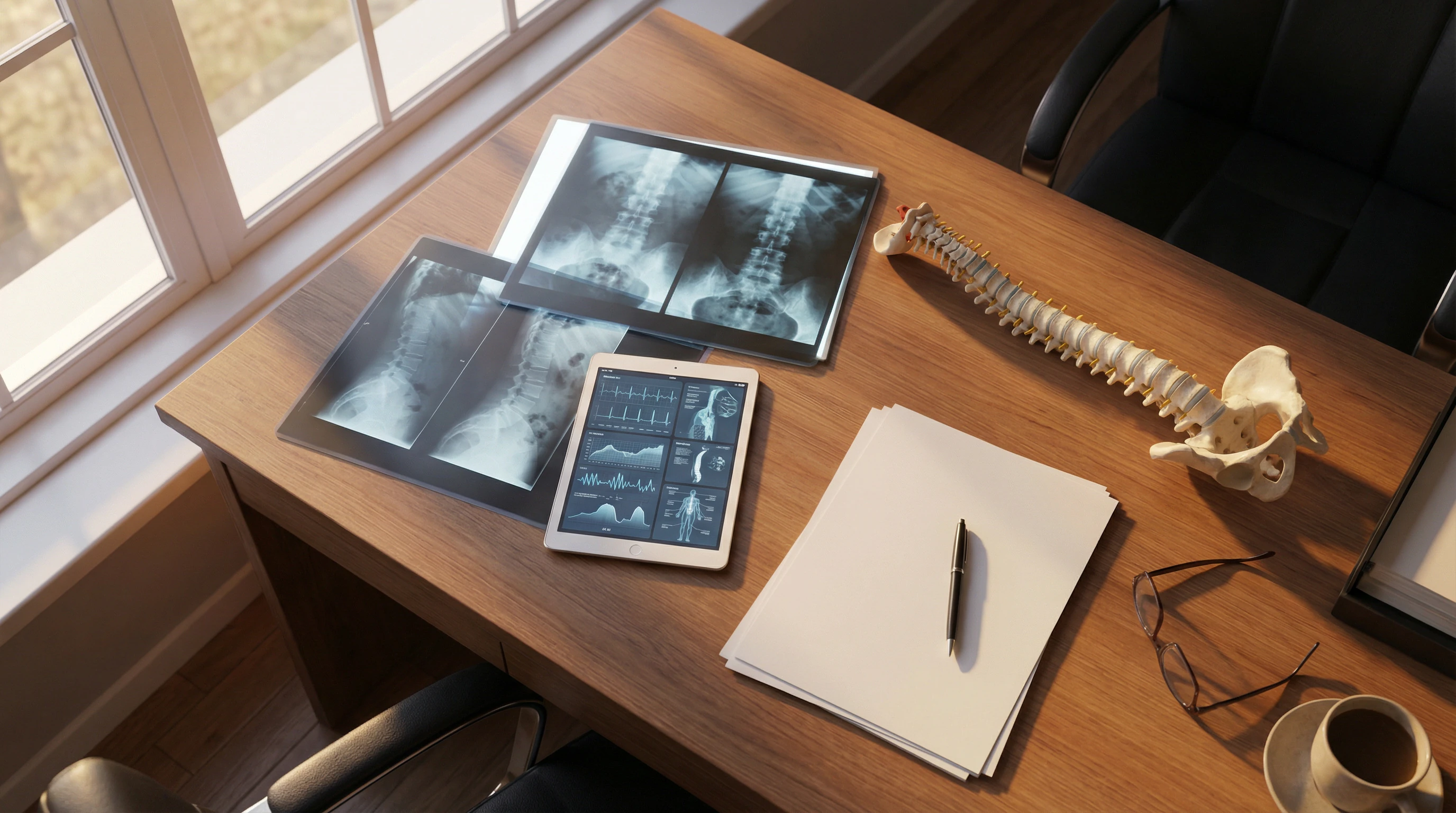
This question can only be answered well when symptoms, neurological examination, imaging, and treatment history are assessed together. Spine surgery can be very appropriate, but not every recommendation is equally well supported.
Four questions before you decide
What structure is being treated? Does it actually fit my symptoms? Have reasonable alternatives been tried? And what exactly is the surgery meant to improve?
If those answers stay vague, caution and a second opinion are usually sensible.
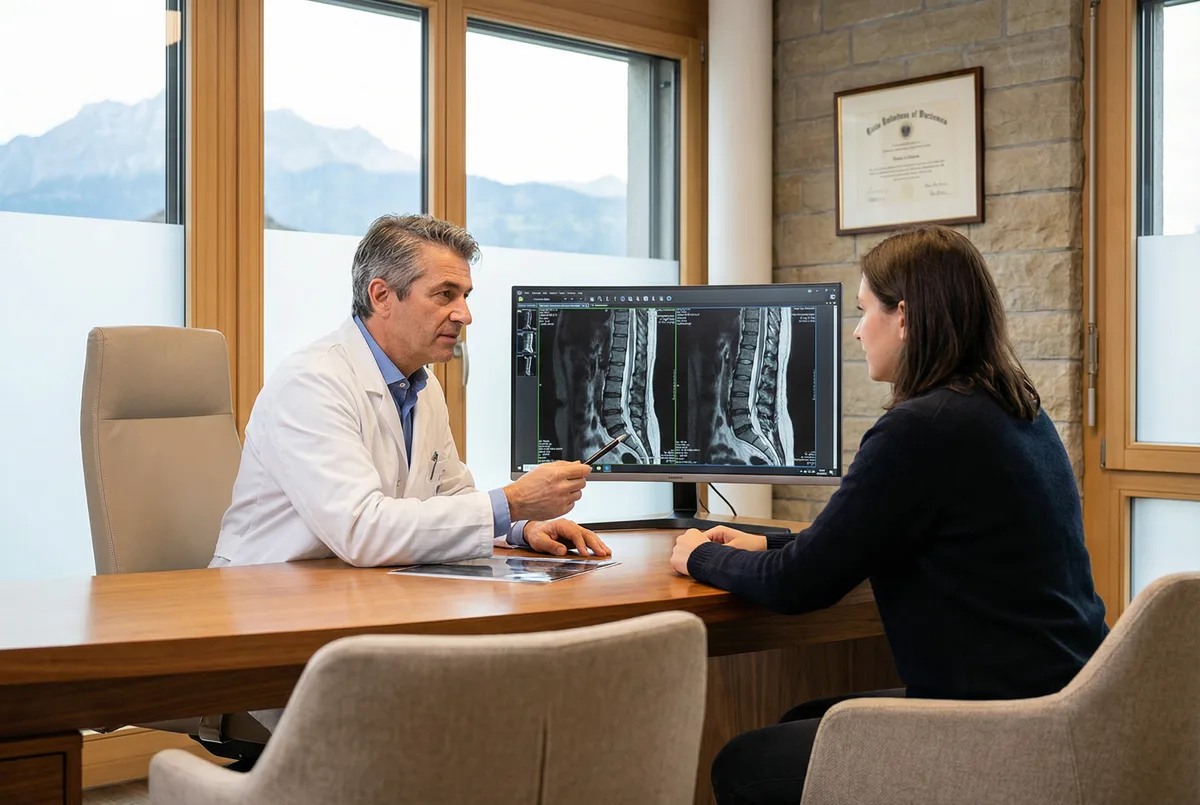
Weighing the Arguments
What tends to support surgery
- Symptoms clearly match the radiological finding.
- There is neurological loss or increasing weakness.
- Good non-surgical care has been tried properly.
- Pain or functional loss remains severe despite treatment.
When extra scrutiny is needed
- When the scan is more convincing than the symptom pattern.
- When the benefit and goal of surgery remain unclear.
- When different specialists recommend very different plans.
- When you are pushed to decide quickly without a coherent explanation.
What guidelines emphasize for sciatica-related surgery
Non-surgical care first
Many people are first observed to see how pain and function evolve with conservative care.
Surgery when findings truly fit
Decompression becomes more relevant when scans and symptoms match and recovery remains insufficient.
Red flags change the urgency
Bladder or bowel dysfunction, saddle numbness, and significant weakness are different from routine elective decisions.
Frequently Asked Questions
No. The decision depends on symptoms, neurological findings, imaging, and the clinical course together. A striking MRI alone is not a reliable indication for surgery.
Yes. A good second opinion is there to secure the right decision, not to oppose surgery automatically. Sometimes it clearly confirms that surgery is appropriate.
Mainly when the imaging and symptoms match, neurological loss is present, or pain and function do not improve enough despite proper non-surgical care.
Further Information
The following sources serve as reliable external references. Final academic citations will be added before publication.
Medically reviewed by Dr. med. Christian R. Etter
Orthopaedic Surgery FMH, specialized in spine surgery
Last medical review: April 2026
View curriculum vitaeGet Your Second Opinion Now!
Usually covered by your Swiss health insurance.
With the Covid pandemic, online competence has increased significantly, even among older people. The home office trend has also shown what is possible online. Telemedicine has made significant progress in the wake of this development, and especially for a quick answer to the question of whether an operation is sensible or not, the personal meeting in the "digital space" is a valuable addition.
How it works
Fill out the questionnaire and upload your documents.
The spinal surgery specialist has access to the documents immediately after receipt in an EU-compliant, data-secure cloud, enabling an extraordinarily fast preparation of the second opinion. Based on the documents, the expert first assesses the urgency. In any case, you will receive the second opinion within 5 working days, with express option in 2 days. In complex case situations, the opinion of an international expert is additionally obtained.
Within 5 working days you will receive the second opinion via email. For ordered emergency express second opinions, you will receive it within 2 working days. At the same time, you will receive a summarizing voice memo with deeper explanations. Together with the second opinion, you will receive an appointment for a 15-minute follow-up discussion via Zoom, Skype or FaceTime. This way, any uncertainties can be clarified.